



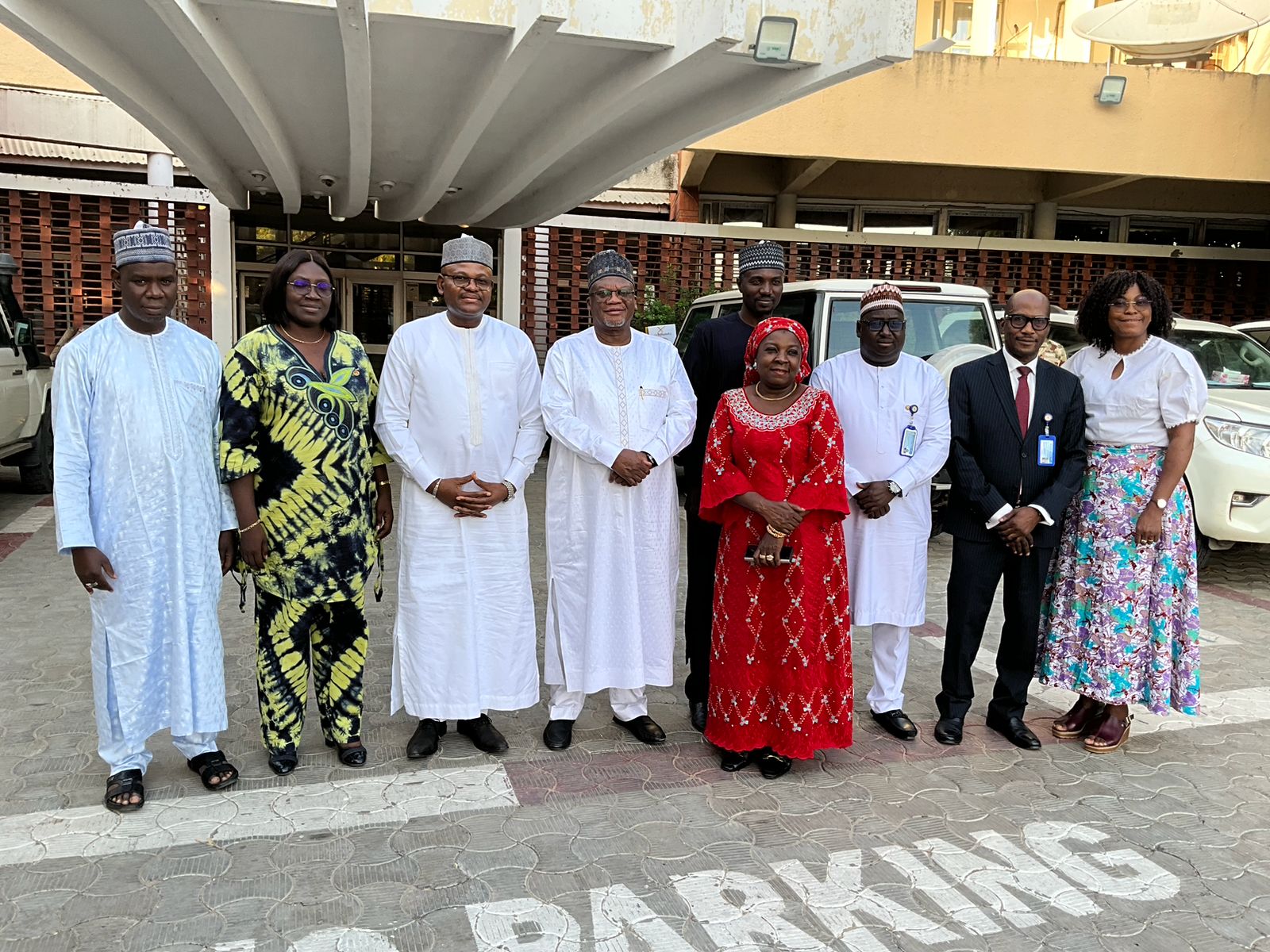
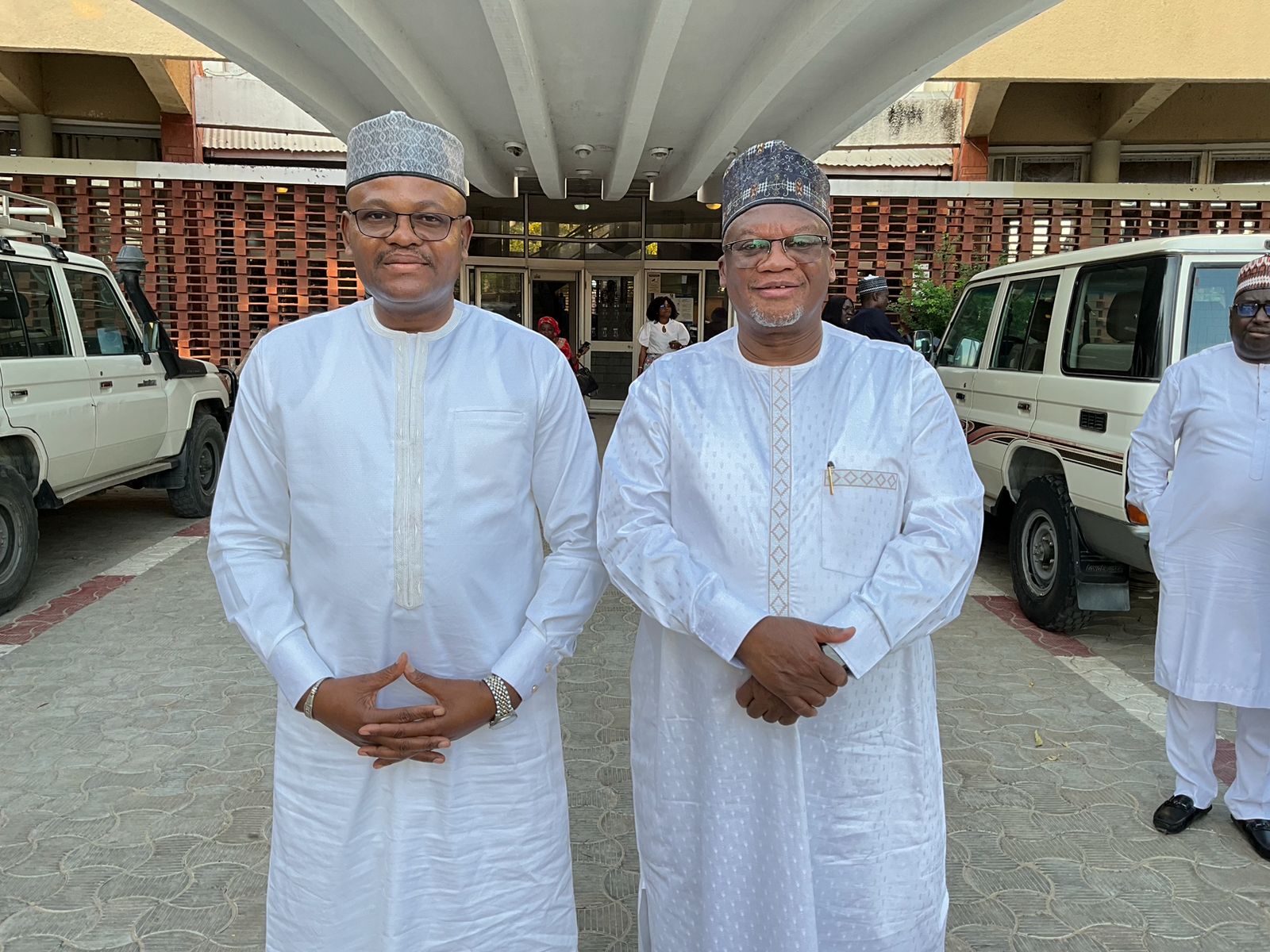
Monday, November 3, 2025 will remain a landmark day for water resources the sustainable management of transboundary water resources in Africa. Mr. Kocou Armand HOUANYE, Executive Secretary of the Niger Basin Authority (NBA), was received in audience by His Excellency, Ambassador Mamman NUHU, Executive Secretary and Head of Mission of the Multinational Joint Task Force (MNJTF) of the Lake Chad Basin Commission (LCBC) in Ndjamena.
A Hopeful Encounter
As a sideline of the holding, from October 27 to November 3, 2026, of four (4) regional meetings and the 2025 Session of the Regional Steering Committee (RSC) of NBA’s projects and programs, Mr. Kocou Armand HOUANYE had extensive discussion on the afternoon of Monday, November 3, with His Excellency Ambassador Mamman NUHU and Experts from the LCBC. For the occasion, the Executive Secretary of the Niger Basin Authority was accompanied by Mr. Nassour SALEH TERDA, Director of Water Resources and Coordinator of the NBA's National Focal Structure (NFS) in Chad, Ms. Nadège Flora DUBARRY/BATIONO, Director General of Water Resources and Coordinator of the NFS/NBA in Burkina Faso, as well as Experts from the NBA’s Executive Secretariat.
Key Discussion Points:
- The expression of the deep gratitude of the NBA’s Executive Secretary to the CBLT’s Executive Secretary for his important and much appreciated support to the holding of the NBA’ regional meetings in N'Djamena;
- The review and the renewal of the Cooperation Framework Agreement between the two Institutions, signed in 2019, for a duration of three (03) years, with a view of taking into account the new contextual elements;
- The search for innovative solutions to be implemented to ensure the sustainable financing of the activities of the both Cross-Border Basin Organizations;
- The exchange of experiences and best practices in the integrated management of shared water resources as well as appropriate responses to issues of common interest;
- The development of joint initiatives, with cross-border impact, for economic growth and poverty alleviation in communities (women, youth) in both (2) Basins;
- The mobilization of Member States’ financial contributions to the annual budget of each of the both Institutions.
Strong Commitments for the Future
Both Parties concluded the meeting with encouraging prospects:
- An accelerated process to revive their Cooperation Framework Agreement.
- An upcoming return visit of the CBLT’s Executive Secretary to NBA’s Headquarters in Niamey;
- A shared commitment to working in synergy for integrated and sustainable development in the transboundary basins of the Lake Chad and the Niger.
#Shared Water Management # Transboundary Cooperation # Sustainable Development # United Africa#.
From October 27th to November 5th, 2025, the Niger Basin Authority (NBA) will hold a series of high-priority regional meetings and workshops in N’Djamena, capital of Chad, aimed at consolidating shared water resources governance, strengthening institutional cooperation, and promoting climate resilience throughout the Niger Basin.
These meetings will be attended by participants from all nine (9) member countries (Benin, Burkina Faso, Cameroon, Chad, Côte d’Ivoire, Guinea, Mali, Niger, Nigeria, and Chad), as well as Technical and Financial Partners, as well as NBA Executive Secretariat staff.
Five (5) major meetings are set to convene: These successive meetings, organized in collaboration with the World Bank (WB), the African Development Bank (AfDB), the German Cooperation (GIZ), and other NBA Technical and Financial Partners, will he held as follows:
1. October 27th and 28th, 2025: Consultation meeting of the Coordinators of the National Focal Structures (NFS) on the redeployment process of the NBA Executive Secretariat staff.
This meeting aims to finalize the redeployment process of the Executive Secretariat staff, and make operational recommendations that will be reviewed by the NBA Council of Ministers at its upcoming Ordinary Session, to be held on December 5th, 2025, in Ouagadougou, Burkina Faso.
2. October 29th and 30th, 2025: Exchange workshop between Experts from the National and Regional Coordinating Units of the Integrated Programme for Development and Adaptation to Climate Change in the Niger Basin (PIDACC/NB), on the implementation of the Programme’s sub-projects and infrastructure.
This workshop will assess the Programme’s progress and, particularly, harmonize approaches to sub-project implementation and infrastructure development, with a view to significantly improving the Programme’s performance until its schedules completion, which is ending December 2027.
3. October 31st and November 1st, 2025: Regional workshop to review and validate the Regional Strategy for Adaptation to Climate Change in the Niger Basin (SRACC/NB).
The objective of the regional workshop is to have participants improve and validate the study report on the Regional Strategy for Adaptation to Climate Change developed as part of the implementation of the PIDACC/NB. The SRACC/NB is an essential tool for guiding climate change adaptation interventions in the sovereign lands of the nine riparian countries of the Niger Basin.
4. November 2nd, 2025: Regional Workshop to review and validate the 2025-2035 NBA Strategic Plan.
This regional workshop will allow participants to review, amend, and validate the new 2025-2035 Strategic Plan informed by the appraisal of the prior plan (2013-2022), and the recommendations from the regional workshop to amend and validate the 2025-2033 NBA Operational Plan.
5.November 3rd – 5th, 2025: 2025 Session
The 2025 session of the Regional Steering Committee (RSC) for NBA Projects and Programmes will primarily review, amend, and validate the 2025 mid-term review of the implementation of the 2025 Annual Work Plan and Budget (AWPB), as well as NBA’s flagship projects and programmes, including PIDACC/NB, WRDSEMP-APL2A, NB-ITTAS, and the GIZ ‘’Support to NBA’’ project. Specific presentations will also focus on dam projects (Kandadji, Selingue, Taoussa, Fomi, Kainji, Jebba, and Lagdo) in the Basin, in order to assess their progress and impacts.
A Strategic Framework for Exchanges
These meetings, which will be held at the Hôtel Résidence SCI HMEC in N’Djamena, reflect the commitment of NBA Member Countries and Partners to bolster coordination, alignment, and mutual benefit in the implementation of regional programmes. They will also provide a forum for exchanges to take stock of progress, identify persistent challenges, and agree on concrete measures to improve the performance and sustainability of interventions in the Niger Basin.
The Niger Basin Authority (NBA) is holding a virtual Extraordinary Meeting of its Technical Committee of Experts (TCE) on October 22nd, 2025, preparatory to the Extraordinary Session of the Council of Ministers, also scheduled to take place online on November 7th, 2025. The meetings of these two NBA governance bodies are part of the ongoing revitalization process of the inter-governmental institution, which works to promote cooperation between member countries (Benin, Burkina Faso, Cameroon, Chad, Côte d’Ivoire, Guinea, Mali, Niger, Nigeria, and Chad), and to ensure integrated, sustainable, inclusive, and resilient development in the Niger Basin.
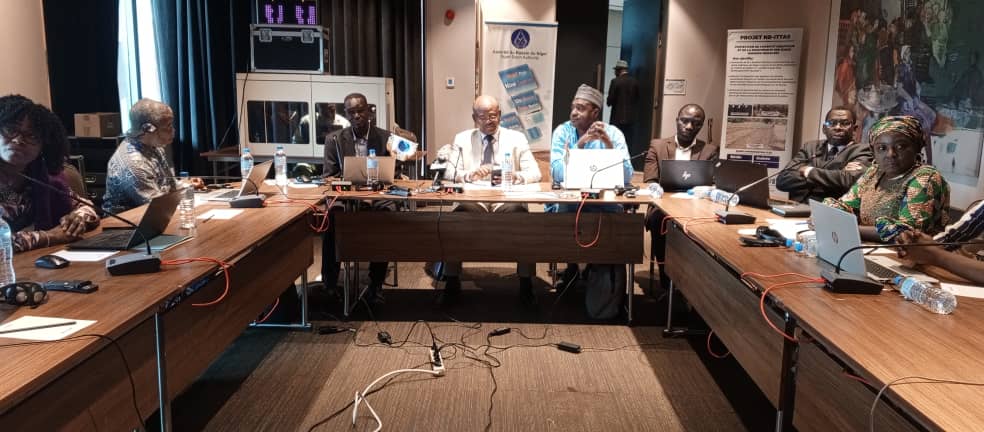
Chaired by Mr. Roger Baro, Minister of Environment, Water, and Sanitation of Burkina Faso and Chairman of the NBA Council of Ministers (CM), the meeting will bring together representatives of the nine member countries, Technical and Financial Partners, and officials of the Executive Secretariat of the Trans-boundary Basin Organization.
The Chairman, along with the eight other Supervising Ministers, members of the Council of Ministers, and the Executive Secretary, Mr. Kocou Armand HOUANYE, are centering discussions of these meetings on a new strategic departure for NBA and regional solidarity. The experts will review key issues relating to: (i) NBA’s financial situation; (ii) the progress of the new headquarters construction project; (iii) the poor performance of PIDACC/NB (Integrated Programme for Development and Adaptation to Climate Change in the Niger Basin), which is in its sixth year of operation; and (iv) the preparation of the 13th Summit of Heads of State and Government of the Niger Basin, scheduled to take place in the first quarter of 2026.
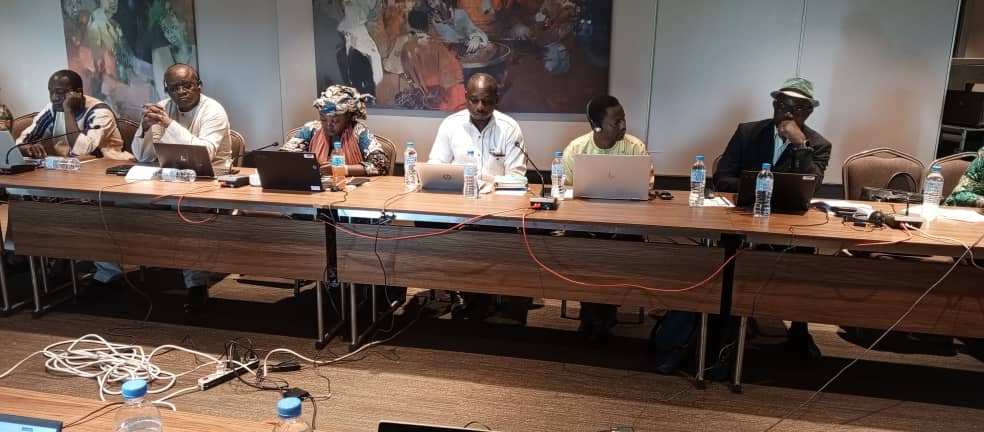
This work reflects the member countries’ desire to make the Niger Basin Authority a top-tier institution, offering diversified, innovative, high-quality services to its member countries with significant impact in its fields of operation, to advance sustainable development and the standard of living of the riparian population.
PROGRAMME FOR INTEGRATED DEVELOPMENT AND ADAPTATION TO CLIMATE CHANGE IN THE NIGER BASIN
Technical and financial supervision mission by the Niger Basin Authority and the Programme Regional Coordinating Unit in CHAD
The Programme for Integrated Development and Adaptation to Climate Change (PIDACC) Chad is strengthening integrated and climate change resilient development in the Mayo Kebbi Est and Mayo Kebbi Ouest Provinces on the Chadian part of the Basin
From 1st to 6th October, 2025, a joint mission of the NBA Executive Secretariat and the PIDACC/NB Regional Coordinating Unit (PRCU) conducted visits to assess the technical and financial progress made in implementing community infrastructures and sub-projects in the Mayo Kebbi Est and Mayo Kebbi Ouest provinces in Republic of CHAD. The field visits helped to confirm actual achievements in tangible rural infrastructures and agroforestry, but also to highlight the significant gains in the climate resilience of ecosystems and beneficiary communities, while identifying measures to be strengthened to ensure the sustainability of the important achievements made.

Picture 1: The mission in front of the GAGAL 100 tonne warehouse
Before undertaking the field visits, the delegation: (i) was received by the Secretary General, Ministry of Water and Energy, and (ii) held a working session with the Chad PIDACC/NB National Coordinating Unit (PNCU/CHAD) to review the implementation of the Programme’s national component.
The mission visited fifteen (15) sites that have benefitted from infrastructure achievements of all kinds and the implementation of community sub-projects meant to strengthen climate resilience for ecosystems and local communities. Each site visit was preceded by exchange meetings with local authorities at all levels (Provincial, Departmental, Prefectural, Communal and Traditional) and with beneficiaries; with a view to assessing the entire process, going from sensitisation to infrastructure acceptance.
Main achievements observed
The visited sites, including Djado Gosso, Sorga, Pala, Gagal, Binder, Lere and Lagon, were thoroughly assessed in the provinces of Mayo Kebbi Est and Mayo Kebbi Ouest. Inspections covered a wide range of: (i) infrastructures, including storage facilities with a capacity of 100 tonnes, hydrometric stations, solar-powered pastoral stations, fish hatcheries, and (ii) works for rehabilitating landing stages, protecting banks and implementing agroforestry projects.

Picture 2: The fish hatchery under construction in Pala to meet the fry needs of fishermen in the area
The technical achievement rates of the works visited vary from 55% to 100%, with the majority of infrastructures complying with the technical specifications set out in the tender documents. These results demonstrate the significant progress made on the ground, while highlighting the importance of rigorous monitoring to ensure the projects’ proper completion and quality.

Picture 3: Group photo with the women group benefiting from the Bambarwa women agroforestry sub-project
Agroecological impacts and productivity gains
The two agroforestry sites visited (where planting, building of stone cordons and using locally produced compost were combined) have an average technical achievement rate of about 70%. Plantations are based on Acacia albida, a species known for its ability to improve soil fertility, all of which contributes to strengthening ecosystems and populations’ resilience to climate change. For example, in Ribaô, the results obtained by one beneficiary show a significant increase in the yield of his field, from 8 to 18 bags of 100 kg of maize per hectare. This increase illustrates the positive impact of agroforestry practices on agricultural productivity and the sustainability of cropping systems.
Furthermore, the actions implemented for protecting the banks of the Léré lake have been remarkably successful, with a 90% technical achievement rate over a distance of 14 km and an average width of 10 m. These works effectively help to reduce erosion and strengthen the resilience of the lake ecosystems mentioned above, while preserving water resources and associated biodiversity in both quantity and quality.
These results highlight the effectiveness of integrated approaches combining agroforestry, soil management and ecosystem protection, offering promising prospects for climate change adaptation and the sustainability of local people’s livelihoods.

Picture 4: Djoddo Gassa hydrometric station installed to collect data for informing field stakeholders of floods
Social ownership and observations
As regards sub-projects, local communities show significant ownership of implemented interventions, together with a tangible improvement in their livelihoods. The beneficiaries, motivated and committed, demonstrate a solid mastery of the techniques they have been taught, demonstrating thus the effectiveness of the training provided, and thus of the knowledge acquired.

Picture 5: The mission at the level of the Ribao site
However, the mission noted significant improvements, particularly in the areas of local governance and close technical monitoring. Strengthened institutional capacity and more sustained institutional support could optimise the sustainability and impact of the initiatives, while consolidating participatory management and the accountability of local stakeholders. These areas for improvement represent essential levers for ensuring the sustainability of the results derived from the actions and maximising their long-term benefits.

Priority recommendations:
- Strengthen sensitisation and effective involvement of all stakeholders;
- Intensify technical and financial monitoring to ensure compliance with standards and the sustainability of achievements;
- Establish and strengthen Local Management Committees for the maintenance and sustainability of assets;
- Formalise public acceptance of infrastructures in order to establish local effective accountability for their management.
The mission highlighted the CHAD PIDACC/NB positive effects on climate change adaptation and sustainable development in the Mayo Kébbi Provinces. Thanks to growing commitment from the Authorities, the project is on track to generate lasting benefits for local populations and ecosystems. Though areas for improvement have been identified, particularly as regards more rigorous monitoring and greater stakeholder involvement, the overall conclusions remain encouraging and the mission would like to urge project stakeholders to intensify their efforts for effectively achieving PIDACC/NB’s implementation objectives.
By maintaining sustained commitment and strengthening synergy of action and good collaboration among all partners, PIDACC/NB Chad is well positioned to deliver positive and sustainable impacts in the Chadian part of the Niger Basin.
TECHNICAL AND FINANCIAL SUPERVISION MISSION OF PIDACC/NB IN CHAD
A delegation of the NBA Executive Secretariat and the Regional Coordinating Unit of the Programme for Integrated Development and Adaptation to Climate Change in the Niger Basin (PIDACC/NB) is conducting a technical and financial supervision mission to the Programme’s Chad National Component from 29th September to 10th October, 2025.
Led by the Ag Technical Director of the Niger Basin Authority (NBA), the delegation includes experts in administration & finance, monitoring & evaluation, and the regional coordinating unit. It was received by the Secretary General of the Ministry of Water and Energy, in the presence of the Chad PIDACC/NB national managers.

The mission’s objectives are:
- Check the status of the execution of the Programme’s activities;
- Identify implementation challenges and constraints, and;
- Propose practical solutions to improve the Programme’s performance.
PIDACC/NB, financed by the AfDB and its partners, has been working for six years to strengthen regional integration among the nine NBA Member Countries, through:
- Control of the silting up of the Niger River;
- Shared management of water resources;
- Strengthening the resilience of ecosystems and populations;
- Rehabilitation of navigation routes, and;
- Strengthening stakeholders’ capacity.
The mission has continued with field visits and in-depth working sessions with the Chad PIDACC/NB National Coordinating Unit, with a view to rigorously monitor of physical and financial achievements.

- THE NBA’s EXECUTIVE SECRETARY, MR KOCOU ARMAND HOUANYE, IN A SIDELINES MEETINGS WITH THE NIGERIA HONORABLE MINISTER OF WATER RESOURCES AND SANIATATION, PROF. JOSEPH UTSEV. AND COTE D’IVOIRE HONORABLE MINISTER OF WATERS AND FORESTS, MR LAURENT TCHAGBA DURI
- NB-ITTAS Project: A Regional Workshop on establishing a Favourable Legal Framework to Reduce Water Pollution in the Niger Basin
- AfDB Mission Reviews Progress and Calls for Collective Action
- Regional workshop of the NB-ITTAS project